
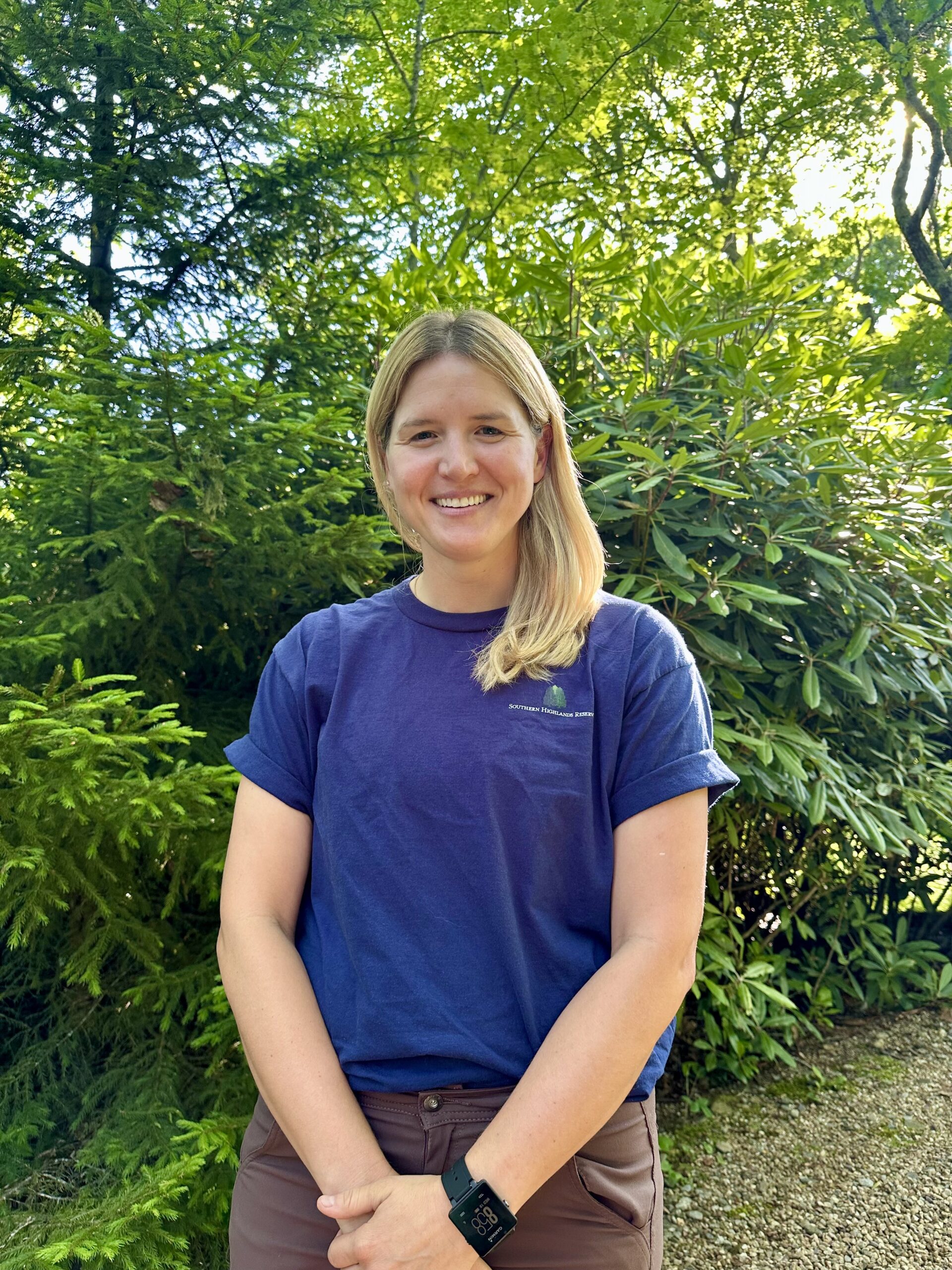
Catherine Frampton grew up in New Orleans, where soul, optimism, and community persist. Summers in the North Carolina mountains gave her contrast—cool forests, open trails, and access to the outdoors she couldn’t find in the city. She sought out nature for the backdrop of her college days and graduated in 2011 from The University of the South with a bachelor’s degree in anthropology and women’s studies.
More than a decade later, in a courageous move very much mirroring the hope and faith imbedded in her hometown, she pivoted from a lucrative but stressful corporate job in health technology to follow her heart back to nature. In the fall, she begins her second year in pursuit of a Master of Landscape Architecture at Louisiana State University, with hopes of expanding access to nature and rewriting some long-held New Orleans narratives about the outdoors.
At SHR, Catherine has helped with everything from garden maintenance to greenhouse care and plant installations. She also brought order to our digital plant database, scanning and organizing hundreds of records. She took a break from potting rudbeckia at the greenhouse to talk with us about her path back to the outdoors.
On North Carolina:
“I was born in Rockingham, North Carolina. We moved to New Orleans when I was five but would spend our vacations in Waynesville every summer. I was lucky to go to summer camp in Black Mountain and at Rockbrook in Brevard. You know when you meet someone and you get that feeling like, ‘I’ve known you my whole life’ — I get that feeling being outside, the sense of returning to something familiar. Western North Carolina has always been that anchor, and the older I get, the more I appreciate it. Access to the outdoors here is unparalleled. From my door to the forest door, I can be on a trail in 15 minutes. It’s remarkable.”
On her career pivot:
“I was in project management and cross walking tech for mergers and acquisitions, helping hospitals streamline their systems and synthesizing between the very different people that make up the team. I’ll always be grateful for it, but I categorically stayed too long in that job. I was restricted by fear that I needed a salary and steadiness and the pressure to show this long-term trajectory. Our job was to manage and translate, and I’m so grateful for the depth of patience that role gave me. I got incredible time management skills, and it showed me that the most important voice in the room is the end user, the customer, whoever is receiving the services. If you’re not working toward a solution that works for the end person, there’s no point in doing the work.”
On what comes next:
“In New Orleans, if you don’t fish or hunt, there’s not a place for you outside. The oppressive heat doesn’t help, but you’re not offered the varieties of parks and trails. It’s not an extension of life like it is here. I believe in New Orleans and the Gulf Coast, and it has its own plight of specific environmental issues, along with the problem of how we get people outside. There’s a carryover from Katrina but also sort of an inherit stigma of nature being dangerous. Outside is scary and bad, and inside is where we’re safe. And then generationally we’re seeing kids are less exposed to the outdoors for a variety of reasons — screens, we don’t have the access, the outdoors are scary. I want to help create more spaces outside in New Orleans on a community level. I keep thinking about how good the outside has been to me, and I want people to feel that. I don’t envision building immense parks or big public spaces, but smaller in scale, maybe residential. I just want people to be able to get outside and enjoy their space.”