
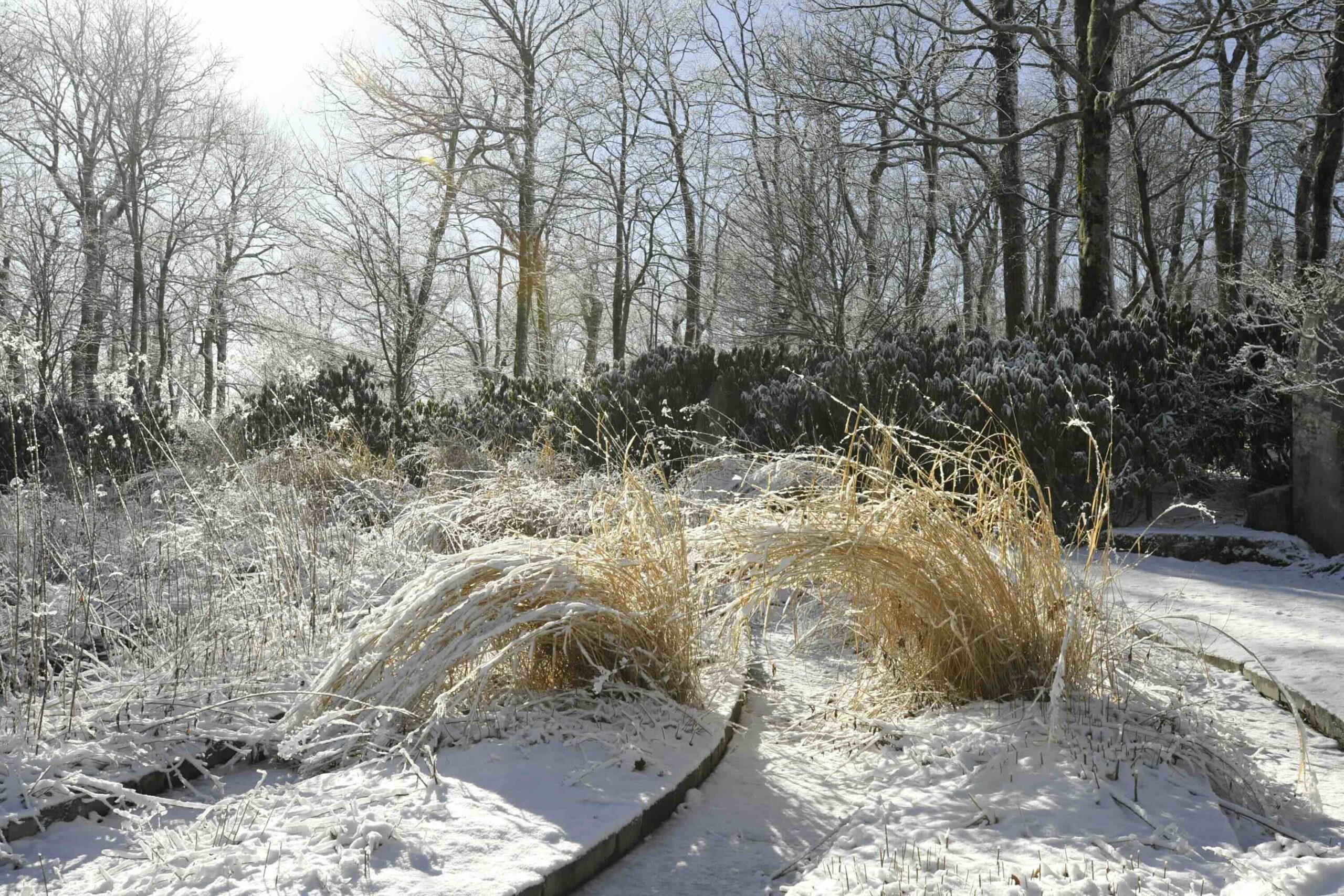
Winter in the Southern Appalachian Mountains is a season of rest on the surface—but beneath the quiet, the landscape is still very much alive. At Southern Highlands Reserve, winter is a time to observe, plan, and care for the land in ways that support the resilience of our high‑elevation ecosystems. Whether you steward a mountain garden or simply enjoy tending native plants at home, this season offers meaningful opportunities to strengthen the health of your landscape.
Leave the Leaves: In the Southern Appalachians, leaf litter is more than a seasonal inconvenience—it’s a living habitat. Many native insects overwinter in the insulating layer of leaves, including moths, butterflies, and beneficial beetles. These insects, in turn, become essential early‑spring food for birds.
- Leave leaf litter in garden beds and under shrubs
- Shred or relocate leaves only where necessary for paths or drainage
- Avoid disturbing areas where you know insects or amphibians overwinter
Prune With Purpose: Pruning in winter allows you to see the natural architecture of plants more clearly. Winter is an ideal time to prune many woody plants, but timing and technique matter in the Southern Appalachians’ variable climate.
- Prune deciduous trees and shrubs once they are fully dormant
- Avoid pruning spring‑blooming natives like serviceberry, azalea, and mountain laurel—wait until after flowering
- Remove dead or diseased wood to reduce pest pressure in spring
- Leave seed heads on native perennials such as coneflower, black‑eyed Susan, and Joe‑Pye weed; they provide winter food for birds and visual interest in the garden
Plan for Native Plant Diversity: Winter is planning season. With leaves down and structure exposed, it’s easier to evaluate gaps in your landscape. Native plants not only support wildlife but are adapted to the region’s steep slopes, acidic soils, and fluctuating winter temperatures. Consider adding:
- Evergreen structure such as native rhododendron, spruce, or hemlock (where hemlock woolly adelgid is managed)
- Winter-fruiting shrubs like winterberry holly, viburnums, and hawthorn
- Host plants for pollinators, including oak, willow, and native grasses
Observe the Landscape’s Winter Patterns: Winter reveals the bones of the Southern Appalachian forest. Without the distraction of foliage, you can see:
- How wind and snow shape plant growth
- Which areas receive the most winter sun
- Where water naturally flows or pools
- Wildlife tracks that tell stories of unseen visitors
These observations help guide thoughtful garden design rooted in the natural rhythms of the mountains.
A Note on Climate and Elevation: High‑elevation gardens experience winter differently than the valleys below. Freeze–thaw cycles, rime ice, and strong winds can stress plants. Choosing species native to elevations similar to the Reserve—such as red spruce, Fraser fir, mountain ash, and flame azalea—ensures better long‑term success.
Winter may appear quiet, but it’s a season rich with opportunity. By tending our gardens with intention, we support the ecological integrity of the Southern Appalachian region and carry forward the conservation values at the heart of Southern Highlands Reserve.