
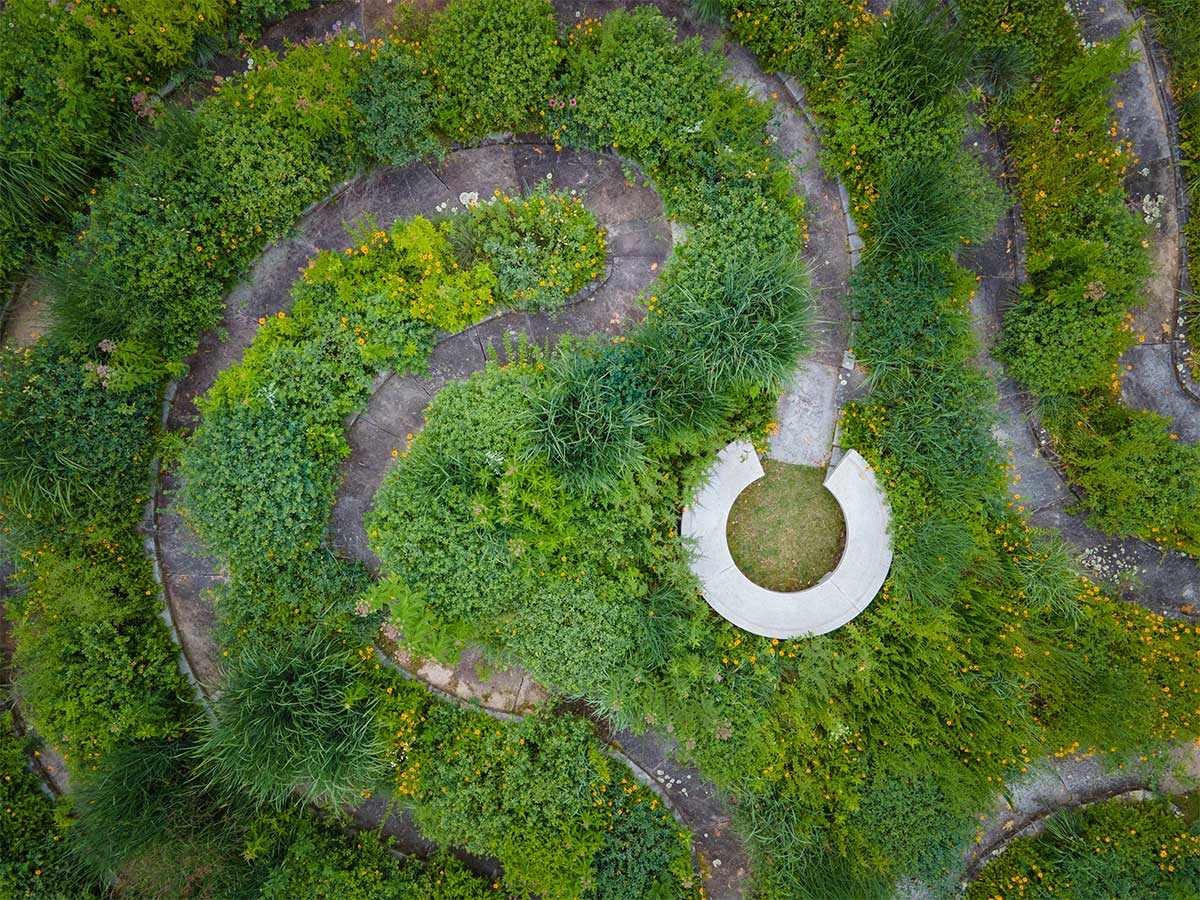
Southern Highlands Reserve is proud to be working with Nelson Byrd Woltz Landscape Architects (NBW) — one of the most celebrated landscape architecture firms in the country — on a comprehensive landscape plan for our 120-acre conservation site on Toxaway Mountain. This is among the most significant planning efforts in our history.
“This project is a very important critical step for the organization’s future,” Kelly Holdbrooks, Executive Director of Southern Highlands Reserve, says. “As a high-elevation conservation site, SHR is a refugia for many species and an area of tremendous natural significance. SHR has been a trailblazer for conservation horticulture and a steward of native plants for the last 25 years, and our conservation work is a direct result of great partnerships in public and private sectors. Nelson Byrd Woltz and their design team brings extraordinary depth of experience in designing landscapes that honor both cultural heritage and natural systems, and we are deeply grateful to be working with their team.”
NBW is a research-driven firm whose work is grounded in ecology, cultural history, and long-term stewardship. In the past 15 years alone, the firm has earned more than 100 awards — including the prestigious Amanda Burden Public Open Space Award — and their projects serve an estimated 30 million visitors annually across 25 states and 11 countries. Their portfolio includes landmark work at some of the most historically and ecologically significant sites in the United States: Thomas Jefferson’s Monticello, Mt. Cuba Center, Winterthur Museum, Gardens & Library, Frederic Church’s Olana Center, Colonial Williamsburg, Bok Tower Gardens, and most recently, George Washington’s Mount Vernon.
NBW’s plan for Southern Highlands Reserve will be grounded in rigorous historical research, ecological analysis, and operational planning. Together, these efforts will guide long-term stewardship, preservation, and resilience of the Reserve’s unique and diverse ecologies while enhancing the visitor experience with increased education, connection, and celebration of the site’s cultural history. Working in close collaboration with Robinson Design Engineers, the team will also identify opportunities to strengthen the site’s stormwater resilience within the context of recent historic flood events, ensuring the landscape and sensitive ecological communities can continue to thrive for generations to come.
The planning effort is already underway. One of the first steps in NBW’s research process was an intensive, on-the-ground ecological survey led by conservation biologist Kevin Caldwell of Mountains-to-Sea Ecological and wildlife biologist Nathaniel Axtell. This kind of systematic inventory is foundational to thoughtful landscape planning: you cannot steward what you have not first taken the time to know. What they found confirmed what many of us have long felt about this place — this is a truly unique biological refuge.
Across Southern Highlands Reserve’s 120 acres, the survey documented 247 plant species and 82 animal species — including 40 bird species (19 of which are tropical migrants), 15 mammal species, 10 amphibian species, 10 butterfly species, and 7 reptile species. Among those are 12 rare plant species and 6 state-rare animal species including the timber rattlesnake, red-breasted nuthatch, common raven, chimney swift, and eastern milk-snake.
Perhaps most striking: 9 of the 11 natural communities identified on the Reserve are rare in North Carolina or the United States — and the four rarest of those communities together cover approximately 25% of the Reserve’s land. The survey also found globally imperiled habitats on-site, including four spray cliff communities, two low-elevation bedrock seeps, a high-elevation rocky summit, and a stunted high-elevation red oak forest. Low-elevation bedrock seeps are an extraordinarily rare ecosystem endemic to the southern Appalachians. The Reserve’s abundant pink-shell azalea population was confirmed, and invasive plant pressure was found to be negligible across the property.
“It is a privilege to work with Southern Highlands Reserve on this landscape of rare ecological richness,” Thomas Woltz, Senior Principal and Owner of NBW, says. “The recent survey confirms what careful stewardship over 25 years has already shown: this mountain is a refuge worth protecting at every scale. Our work will translate that scientific understanding into a plan that welcomes the next generation of visitors to know and to protect this extraordinary place.”
This is not just a beautiful place. It is an ecologically irreplaceable one. These findings will form the scientific foundation of NBW’s comprehensive plan — and they deepen our commitment to getting this stewardship right, for the long term.