
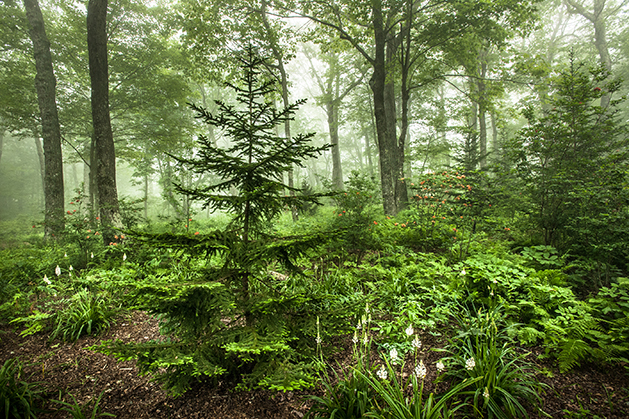
Spring is an excellent time to establish native plants. In a typical spring season, the soil moisture is high and the temperatures are moderate. This spring was challenging because of an abrupt swing from extended drought to heavy rain. Still, we were able to add new cinnamon fern (osmundastrum cinnamomeum), mountain stonecrop (sedum
ternatum), fire pink (silene virginica), seersucker sedge (carex plantaginea), and mountain pachysandra (pachysandra procumbens) at the Reserve. Our horticultural staff carefully prodded the planting beds out of their winter slumber, added leaf mulch, strategically weeded, and amended soils.
One spring task that helps to extend the bloom of rhododendrons and azalea (ericaceae) is to physically remove galls. Galls are a fungus that converts emerging foliage into soft, round growth on the tips of plant stems. They are not harmful to the plant, but they can be unsightly and will spread if not removed. Our staff and volunteers stay busy each spring removing galls, so that the garden can be in bloom as long as possible.
Tips from the Garden Staff
- Our plant sale in July will feature regionally appropriate natives — a great opportunity to stock your garden with plants that truly belong here.
- Leave last year’s leaves in garden beds a bit longer — many native bees overwinter in hollow stems and leaf litter.
- When purchasing natives, look for locally-sourced stock whenever possible — plants grown from regional seed are better adapted to our climate.